

Basic First Aid Online Certification
$105
$150
30% Off
- Blended First Aid + CPR/AED
- WSIB Approved
- Ontario Compliant
- Online + In-Person
- 75% Pass Required
- Valid for 3 Years
Choose the right first aid training path with flexible Basic and Intermediate First Aid online courses built for workplaces, caregivers, supervisors, and individuals who need clear, practical emergency response instruction.





Meets national compliance standards
For individuals and teams
Save with group enrollment
Works on all your devices
Students Certified
Years of Experience
Businesses Trust Us

Basic First Aid is ideal for learners who need a clear introduction to emergency response, while Standard First Aid is designed for workplaces and roles that require broader injury care and readiness. Together, these courses help individuals and teams respond with more confidence when emergencies happen.
Common learners and teams who benefit from Basic or Standard First Aid training include:
Workplaces, caregivers, and everyday responders rely on Standard First Aid training for:
The Standard First Aid course was clear, practical, and easy to complete. I was able to finish it without disrupting my workday and felt much more prepared to respond to real incidents afterward.
Clinic Manager
I assigned this training to our team because it explained injuries, response steps, and safety expectations in a straightforward way. It was clean, practical, and easy to document for compliance.
Practice Administrator
The course felt realistic rather than generic. The examples were useful, the lessons moved quickly, and the certificate process was smooth once I finished the training.
Operations Manager
Answers to common questions about our Basic and Standard First Aid courses, certificates, and course access.
Basic First Aid is suited for learners who want a straightforward introduction to emergency response. Standard First Aid is designed for broader workplace and role-based readiness, with wider coverage for common injuries and incident response.
Basic First Aid is a good fit for individuals, families, new workplace learners, caregivers, and anyone who wants foundational first aid confidence without needing the broader coverage of the Standard course.
Standard First Aid is ideal for workplace teams, supervisors, support workers, childcare staff, service professionals, and learners who need more complete first aid training for job readiness or internal training requirements.
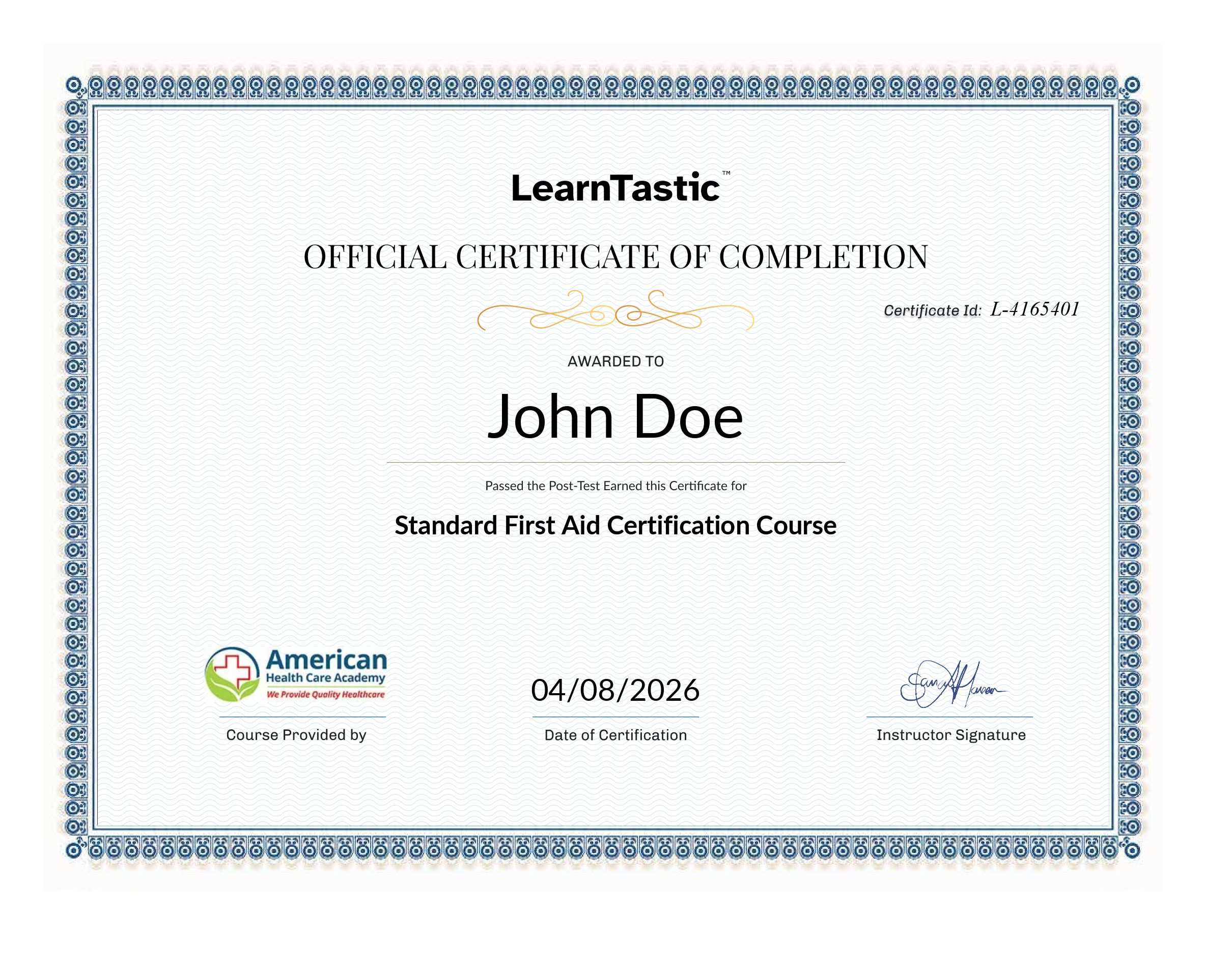
After you successfully complete either the Basic or Standard First Aid course requirements, your certificate is made available for download so you can keep it for personal or workplace records.
Yes. Both courses are designed for flexible self-paced learning. Many learners use their completion certificates as part of internal workplace documentation, though any role-specific or regulator-specific requirement should still be confirmed with the employer or governing body.